
Social Media Marketing What Is: 7 Practical Things You Should Know
A beginner friendly explanation of social media marketing, its purpose, common methods, business applications, and practical examples.
Introduction
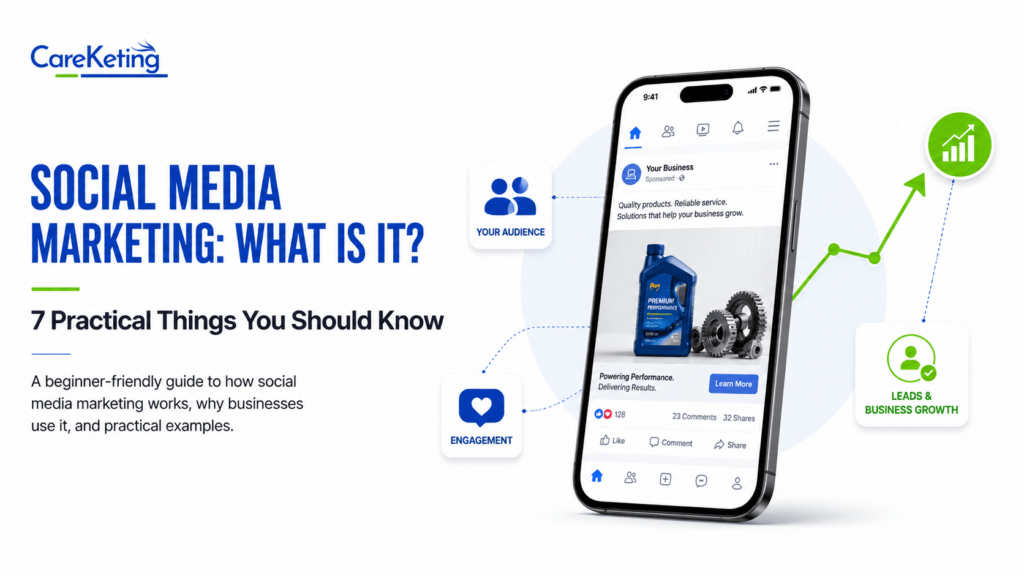
When someone searches social media marketing what is, they are usually looking for a simple answer, not a complicated marketing textbook. At its basic level, social media marketing means using platforms such as Facebook, Instagram, LinkedIn, YouTube, and others to build awareness, communicate with an audience, generate interest, and support business goals.
But there is more to it than posting pictures regularly.
A small business may use social media to bring local customers into a store. A manufacturer may use it to attract distributors. A professional may use LinkedIn to build credibility and generate enquiries. The method changes, but the underlying idea remains the same.
Table of Contents
Social Media Marketing Meaning
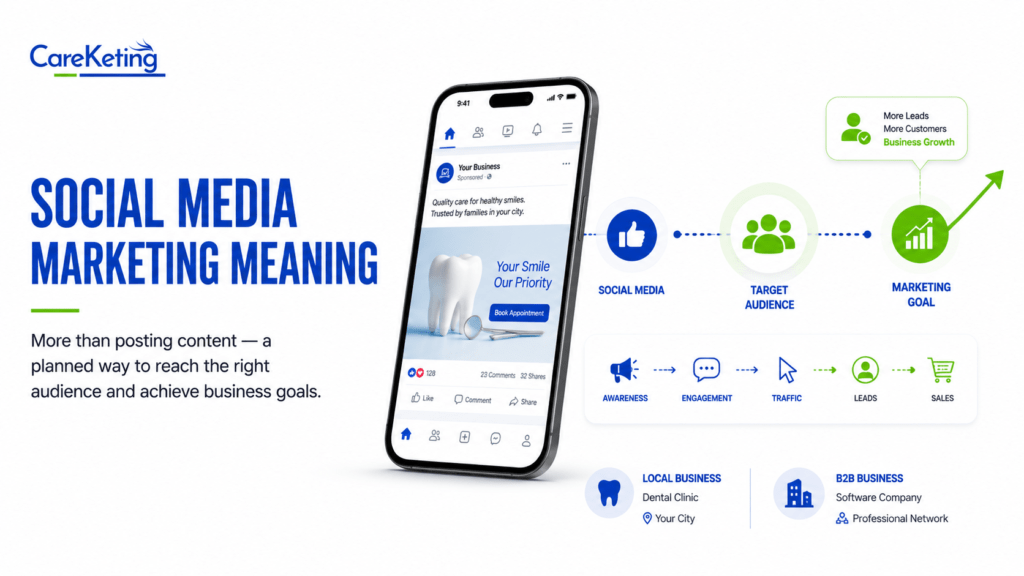
The simplest social media marketing meaning is the use of social media platforms to communicate with a target audience and support marketing objectives.
Those objectives may include brand awareness, customer engagement, website traffic, lead generation, sales, or community building.
For example, a local dental clinic can publish educational posts about dental care, answer common questions, and use paid campaigns to reach people in nearby locations. A B2B company can publish product information and industry insights on LinkedIn to stay visible among potential buyers.
So, when asking social media marketing what is, remember that it is not simply about uploading content. It is a planned marketing activity.
What Is the Social Marketing Concept?
The social marketing concept focuses on understanding people, their needs, their behaviour, and the value a business can provide through communication.
In practical marketing, this means asking better questions before creating content.
Who is the audience?
What problem are they trying to solve?
What information do they actually care about?
What action should they take after seeing the content?
The social concept of marketing becomes useful when businesses stop treating every post as an advertisement and start thinking about the relationship between the brand and its audience.
How Social Media Marketing Works
Understanding social media marketing what is also requires understanding how the process works.
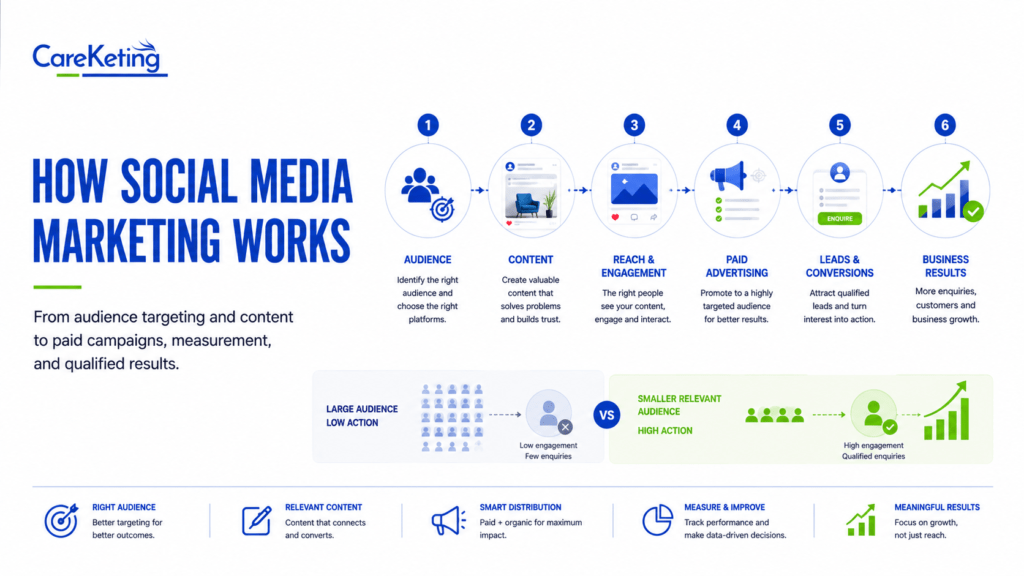
First, a business identifies its target audience and chooses suitable platforms. Then it develops content around useful topics, products, services, customer problems, or brand messages.
The content may include educational posts, videos, product demonstrations, customer stories, testimonials, polls, or promotional offers.
Businesses can also use paid advertising to reach specific audiences. Performance can then be evaluated using metrics such as reach, engagement, clicks, leads, conversions, and cost per result.
From practical campaign experience, one important lesson is that reach alone does not tell you whether marketing is working. A smaller audience that generates qualified enquiries may be much more valuable than a large audience that never takes action.
7 Main Types of Social Media Marketing
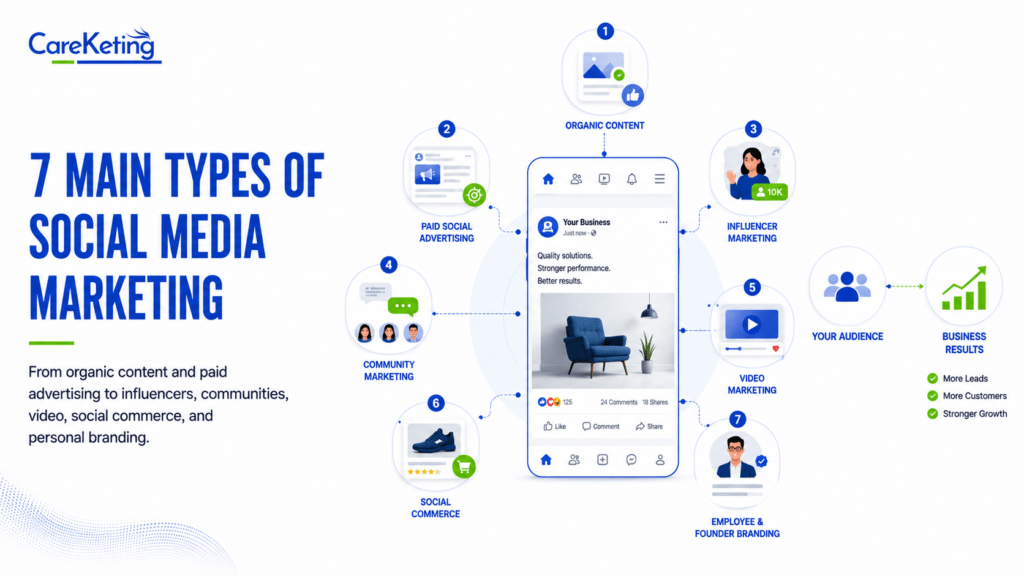
1. Organic Content
This includes regular posts, educational content, images, videos, stories, and community updates.
2. Paid Social Advertising
Businesses pay platforms to distribute advertisements to selected audiences based on factors such as location, interests, behaviour, or professional information.
3. Influencer Marketing
Brands collaborate with creators who have an established audience and relevant credibility.
4. Community Marketing
This focuses on conversations, customer interaction, feedback, and building an active audience around a brand.
5. Video Marketing
Short videos, tutorials, product demonstrations, and educational videos can help businesses communicate ideas quickly.
6. Social Commerce
Businesses can use social platforms to showcase products and support the buying process.
7. Employee and Founder Branding
Employees or business owners can share industry knowledge, experiences, and opinions to create a more human connection with the market.
Practical Examples
Consider a lubricant manufacturer trying to attract distributors.
Instead of posting only product photos, the company could create educational content about lubricant selection, distributor support, product availability, and common industry mistakes. Paid social campaigns could then target relevant business audiences.
A local restaurant could use customer photos, short videos, location based promotions, and reviews.
A marketing consultant could share practical case studies and lessons from real campaigns.
These examples show why social media marketing what is cannot be answered simply as “posting on social media.” The strategy depends on the business, audience, and objective.
Common Mistakes
One common mistake is posting without a clear purpose.
Another is trying to be active on every platform. A business may be better served by managing two channels consistently rather than maintaining five neglected profiles.
Businesses also sometimes focus too heavily on promotional content. People usually need useful information, proof, education, and trust before they are ready to buy.
Ignoring comments and messages is another missed opportunity. Social media is communication, so the audience should receive actual responses.
Best Practices
A practical approach to social media marketing what is starts with strategy rather than design.
Define the audience first. Choose platforms based on where that audience actually spends time. Create content around a few clear themes, maintain a consistent publishing schedule, and review performance regularly.
Do not judge every post in isolation. Look for patterns over time.
Also, connect social activity with real business outcomes. For a local business, that could mean enquiries or store visits. For a B2B company, it could mean qualified leads or distributor conversations.
Frequently Asked Questions
Social media marketing what is it?
It is the planned use of social media platforms to communicate with audiences, build visibility, generate interest, and support business objectives.
What is social media marketing used for?
It can be used for awareness, customer engagement, lead generation, website traffic, sales, reputation building, and community development.
What is the social marketing concept?
The social marketing concept focuses on understanding people and delivering communication that is relevant to their needs, interests, and behaviour.
What is the social concept of marketing?
The social concept of marketing looks at marketing as an ongoing relationship between a business and its audience rather than only a sales activity.
Is social media marketing useful for small businesses?
Yes. Small businesses can use organic content, local targeting, customer interaction, and paid campaigns to reach relevant audiences without needing a large marketing department.
Is social media marketing free?
Organic posting can be done without paying the platform for distribution, but businesses may still have costs for content creation, management, tools, or paid advertising.
Conclusion
The question social media marketing what is has a simple starting answer, but its practical application is much broader. It is a structured way of using social platforms to communicate with the right audience and move people toward meaningful business actions.
The strongest strategies are usually not built around posting more. They are built around understanding customers better, creating useful content, choosing the right platforms, and measuring whether that activity is producing meaningful results.
For businesses, the real value comes when social media becomes part of a wider marketing system instead of being treated as a daily posting task.