
Social Media Marketing: Strategy, Benefits, Platforms & Examples
A practical guide to social media marketing, including its meaning, major platforms, strategy, benefits, content methods, advertising, and real business examples.
Introduction
If you have ever wondered why some businesses consistently appear on Instagram, Facebook, LinkedIn, or YouTube while others struggle to get attention, the answer usually comes down to having a clear social media marketing approach.
Social media marketing is not simply posting pictures every day. It involves understanding your audience, creating useful content, building relationships, promoting products or services, and measuring whether your activity is helping the business.
For example, a local restaurant may use Instagram to attract nearby customers, while a manufacturer may use LinkedIn and Facebook to reach distributors. The platforms can be different, but the principle remains the same: reach the right people with the right message.
Table of Contents
What Is Social Media Marketing?
The social media marketing definition is simple. It is the use of social platforms to communicate with an audience and promote a business, product, service, or brand.
The social media marketing meaning becomes clearer when you look at what businesses actually do on these platforms.
They publish educational posts, product demonstrations, customer stories, short videos, industry information, offers, advertisements, and other forms of social media content.
The objective may be brand awareness, audience engagement, website traffic, enquiries, lead generation, or sales.
A good social media marketing plan therefore starts with the business objective rather than the platform.
How Social Media Marketing Works
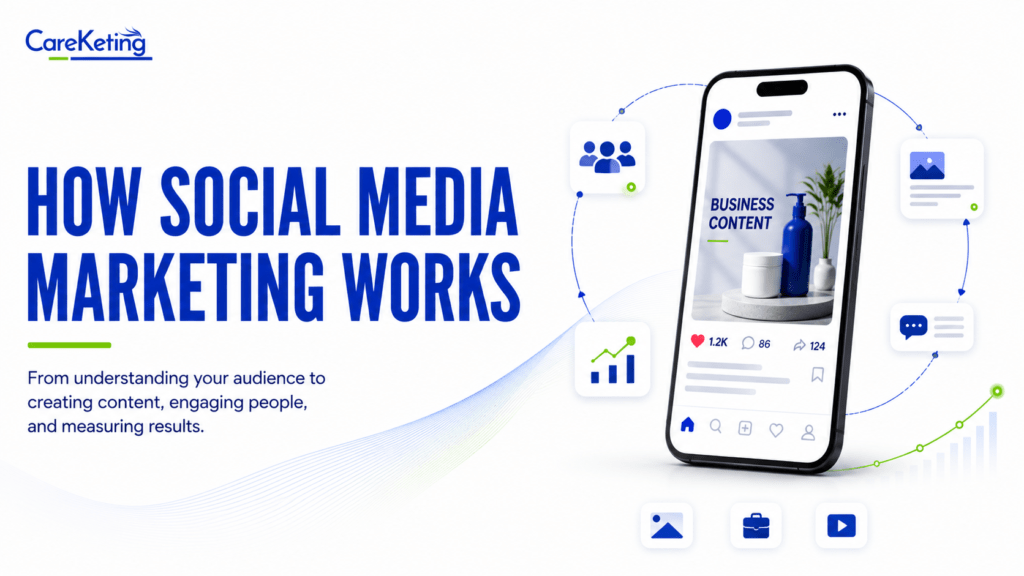
A practical social media marketing strategy usually follows a simple process.
1. Understand the Audience
First, identify who you want to reach.
A manufacturer targeting distributors will communicate differently from a salon targeting local consumers. Understanding customer problems, interests, location, buying behaviour, and objections makes content more relevant.
2. Choose Suitable Platforms
There is no need for every business to be active everywhere.
Instagram can work well for visual businesses. LinkedIn can be useful for professional and B2B communication. Facebook can support local communities and advertising. YouTube can be useful when products or services require detailed explanation.
3. Create Useful Content
Content creation for social media should have a purpose.
A business can create educational posts, product content, demonstrations, FAQs, testimonials, behind the scenes material, case studies, and short videos.
The strongest content often answers a question the customer already has.
4. Promote and Engage
Organic content can be supported by social media advertising when a business wants to reach a more specific audience.
At the same time, businesses should respond to comments, messages, questions, and feedback. Social media is a communication channel, not just a publishing platform.
5. Measure Results
Track metrics that match your objective.
For awareness, reach and impressions may matter. For lead generation, qualified enquiries and cost per lead are more useful. For ecommerce, purchases and revenue may be the important measures.
Major Social Media Platforms
Different social media platforms serve different purposes.
Instagram is useful for visual storytelling, short videos, product showcases, educational content, and community building.
Facebook can be useful for local businesses, communities, customer communication, and paid campaigns.
LinkedIn is particularly relevant to B2B companies, professionals, manufacturers, service providers, and businesses seeking partnerships or commercial enquiries.
YouTube
YouTube works well for tutorials, product demonstrations, interviews, reviews, educational videos, and detailed explanations.
The right platform is the one where your target audience is active and where your business can consistently create useful content.
How to Create a Social Media Marketing Strategy
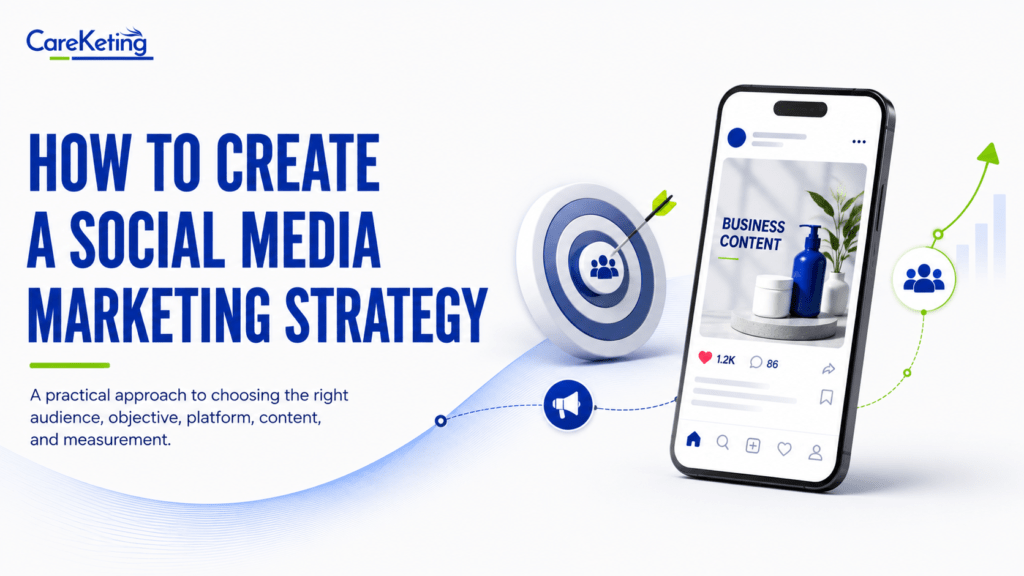
A basic social media marketing strategy can be built around five questions:
Who: Who is your target audience?
Why: What business objective are you trying to achieve?
Where: Which social platform is relevant to that audience?
What: What content would genuinely help or interest them?
Measure: Which numbers will tell you whether the strategy is working?
For example, suppose a lubricant manufacturer wants distributor enquiries. Instead of posting only product photographs, its strategy could include distributor focused content, product education, company credibility, customer support information, and targeted advertising.
That is a more purposeful social media marketing approach than simply maintaining a posting schedule.
Benefits of Social Media Marketing
There are several practical social media marketing benefits for businesses.
Build Brand Awareness
Regular and useful communication helps people become familiar with a business.
Improve Audience Engagement
Comments, messages, shares, and discussions can create direct interaction with customers.
Support Lead Generation
Businesses can use advertisements, forms, landing pages, direct messages, and calls to generate enquiries.
Increase Online Visibility
Consistent social media activity can help a business remain visible while customers research different options.
Understand Customers Better
Comments, questions, engagement patterns, and campaign data can reveal what customers care about.
However, followers alone should not be treated as proof of business success. A smaller but relevant audience can be more valuable than a large audience that never becomes customers.
Social Media Marketing Examples
Consider a local dental clinic. It could publish simple educational videos about common dental problems, answer frequently asked questions, share genuine patient feedback, and run location focused advertisements.
A textile manufacturer could use LinkedIn and Instagram to showcase production capabilities, product categories, factory processes, and business enquiries.
A financial service company could publish educational content explaining loan requirements and then use targeted campaigns to generate relevant enquiries.
These social media marketing examples show why strategy must be connected to the business model.
Common Social Media Marketing Mistakes
One common mistake is posting without knowing who the content is intended for.
Another is copying competitors without understanding their audience.
Businesses also sometimes focus too much on likes and followers while ignoring enquiries, website visits, sales, or customer quality.
Finally, changing strategy every few days makes it difficult to understand what actually worked.
Good social media marketing requires consistency, testing, measurement, and patience.
Frequently Asked Questions
What is social media marketing?
Social media marketing is the process of using social platforms to communicate with audiences, build brand awareness, promote products or services, generate leads, and support business goals.
Why is social media marketing important?
It can help businesses reach relevant audiences, communicate directly with customers, build familiarity, distribute content, and generate enquiries or sales.
Which social media platform is best for business?
There is no universal answer. The best platform depends on the target audience, industry, content format, and business objective.
Is social media marketing free?
Organic posting can be done without paying for advertising, but businesses may still have costs for content creation, management, tools, or professional services. Paid advertising requires an additional media budget.
How often should a business post on social media?
There is no fixed number that works for every business. Consistent, useful content is generally more valuable than publishing frequently without a clear purpose.
How can social media marketing generate leads?
Businesses can use targeted advertisements, lead forms, landing pages, direct messages, calls, offers, and educational content to encourage potential customers to take the next step.
Conclusion
Social media marketing is most effective when it is treated as a business activity rather than simply a content posting task.
The right strategy starts with understanding the customer, choosing suitable platforms, creating relevant content, using advertising where appropriate, and measuring meaningful outcomes.
A local business, manufacturer, B2B company, and ecommerce brand may all use social media, but their strategies should look different because their customers and business objectives are different.
The goal is not to collect the highest number of followers. The goal is to build useful visibility, create meaningful engagement, and move the right audience closer to becoming customers.
Before planning your next social media campaign, define your audience, business objective, main platform, content themes, and success metric. That simple foundation can make your social media marketing much more focused and measurable.