
Lead Generation on LinkedIn: 15 Proven Strategies to Get B2B Leads
A practical guide to using LinkedIn for B2B prospecting, relationship building, outreach, content, advertising, and qualified lead generation.
Introduction
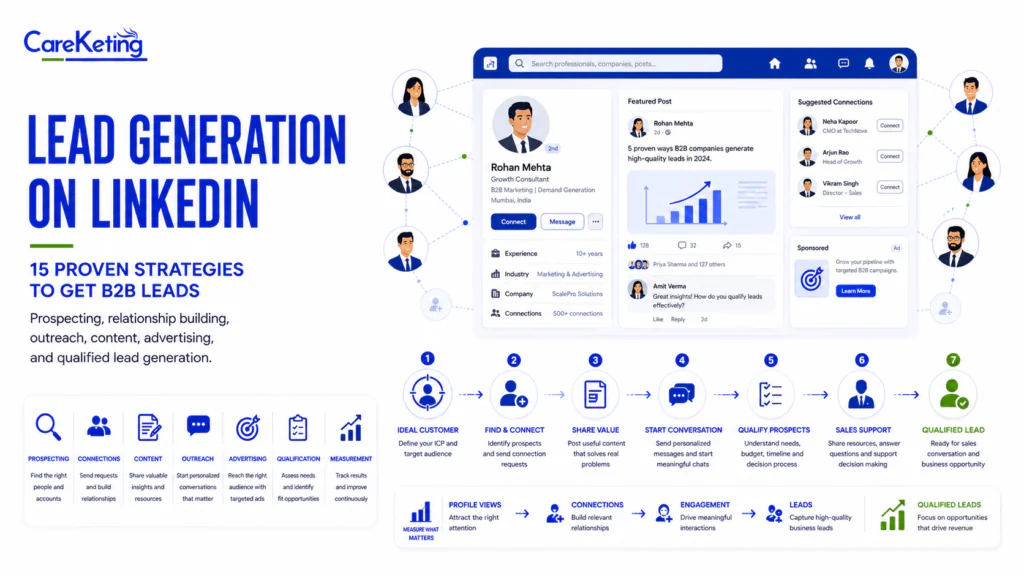
For a B2B business, finding the right decision maker can be harder than simply finding people who might be interested in a product. This is where lead generation in LinkedIn can be useful.
LinkedIn brings together business owners, executives, manufacturers, consultants, sales professionals, marketers, and other professionals in one professional environment. That makes it particularly useful for B2B prospecting and relationship building.
However, successful lead generation in LinkedIn is not about sending hundreds of identical messages. It requires a clear target audience, a credible profile, useful content, relevant conversations, and a sensible follow up process.
Table of Contents
Why Lead Generation in LinkedIn Works for B2B Businesses
The biggest advantage of LinkedIn is professional context.
A manufacturer looking for distributors, for example, can identify people based on industry, company, job role, location, and professional background. This makes lead generation in LinkedIn more focused than simply advertising to a broad audience.
A practical approach is to first define the ideal prospect. Ask:
- What industry are they in?
- What job role do they have?
- What company size fits the business?
- Which locations matter?
- What problem does your product solve?
- Who is involved in the buying decision?
Once these answers are clear, your LinkedIn marketing strategy becomes much easier to build.
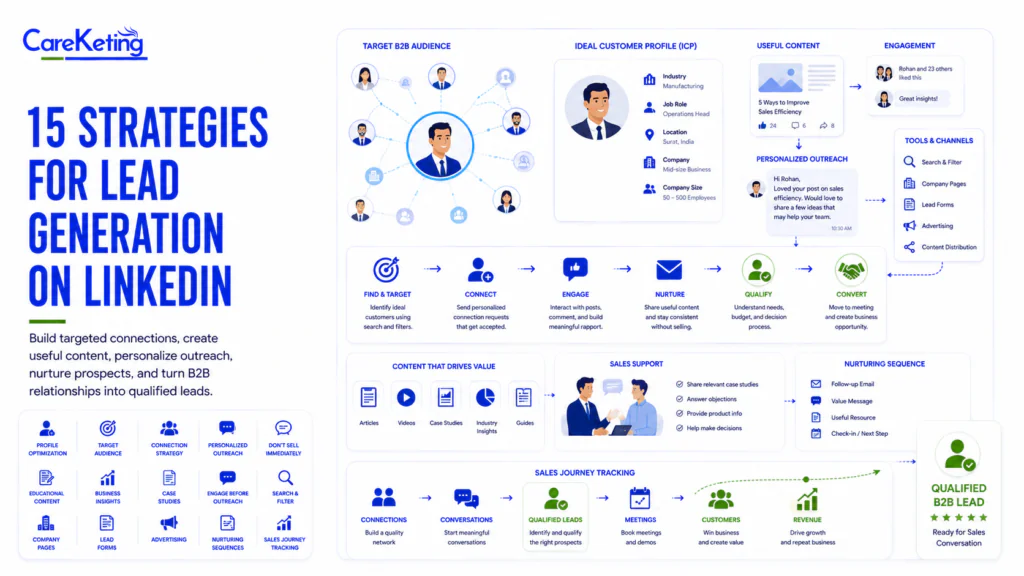
15 Strategies for Lead Generation in LinkedIn
1. Optimize Your Personal Profile
Your profile is often the first thing a prospect checks after receiving a connection request.
Use a professional photograph, clear headline, relevant experience, and a simple description of the problems you help businesses solve.
2. Define a Specific Target Audience
Avoid targeting “all business owners.”
A lubricant manufacturer, for example, may specifically target lubricant distributors and wholesalers in selected states.
Specific targeting improves the quality of LinkedIn business leads.
3. Build a Relevant Connection Strategy
Connection requests should be based on relevance.
Look for people who match your ideal customer profile rather than adding large numbers of unrelated professionals.
4. Personalize LinkedIn Outreach
A short personalized message is usually more useful than a generic sales pitch.
Mention something genuinely relevant about the prospect, their company, industry, or recent activity.
5. Do Not Sell Immediately
One of the common mistakes in lead generation in LinkedIn is trying to sell during the first interaction.
Start a useful conversation. Ask about a relevant business issue or share something that may help them.
6. Publish Educational Content
LinkedIn content marketing can establish credibility before a sales conversation begins.
For example, a B2B agency could publish practical content about reducing customer acquisition costs instead of posting only promotional service messages.
7. Share Real Business Insights
Generic motivational posts rarely demonstrate expertise.
Share campaign observations, industry lessons, mistakes businesses commonly make, or practical examples from your experience.
8. Use Case Studies
A case study can explain the problem, approach, implementation, and outcome.
Even when exact financial numbers cannot be disclosed, explaining the reasoning behind a campaign can make your content more useful.
9. Engage Before Outreach
Commenting thoughtfully on a prospect’s relevant posts can make your name familiar before you send a message.
This is a simple part of relationship based lead generation in LinkedIn.
10. Use LinkedIn Search Effectively
Search can help identify prospects by company, industry, role, location, and other professional characteristics.
For larger prospecting operations, LinkedIn Sales Navigator can provide additional search and prospecting capabilities.
11. Build Your Company Page
A LinkedIn company page can support credibility by showing what the business does, what it publishes, and how it communicates with its audience.
However, do not depend only on the company page. Personal profiles often play an important role in B2B conversations.
12. Test LinkedIn Lead Forms
LinkedIn lead forms can reduce friction by allowing prospects to submit information without completing a separate website form.
They can be useful when paired with a clear offer and well defined audience.
13. Consider LinkedIn Advertising
LinkedIn Ads can help businesses reach professional audiences based on relevant characteristics.
For expensive B2B products, targeting quality matters more than simply maximizing impressions.
14. Nurture Interested Prospects
Not every prospect will be ready to buy after one conversation.
Lead nurturing on LinkedIn can involve useful content, relevant follow ups, industry insights, and timely conversations.
15. Track the Entire Sales Journey
Do not judge lead generation in LinkedIn only by connection requests or message replies.
Track:
- Connections generated
- Conversations started
- Qualified prospects
- Meetings booked
- Opportunities created
- Customers acquired
- Cost per qualified lead
- Revenue generated
This gives a much clearer picture of campaign performance.
A Practical Example of LinkedIn Lead Generation
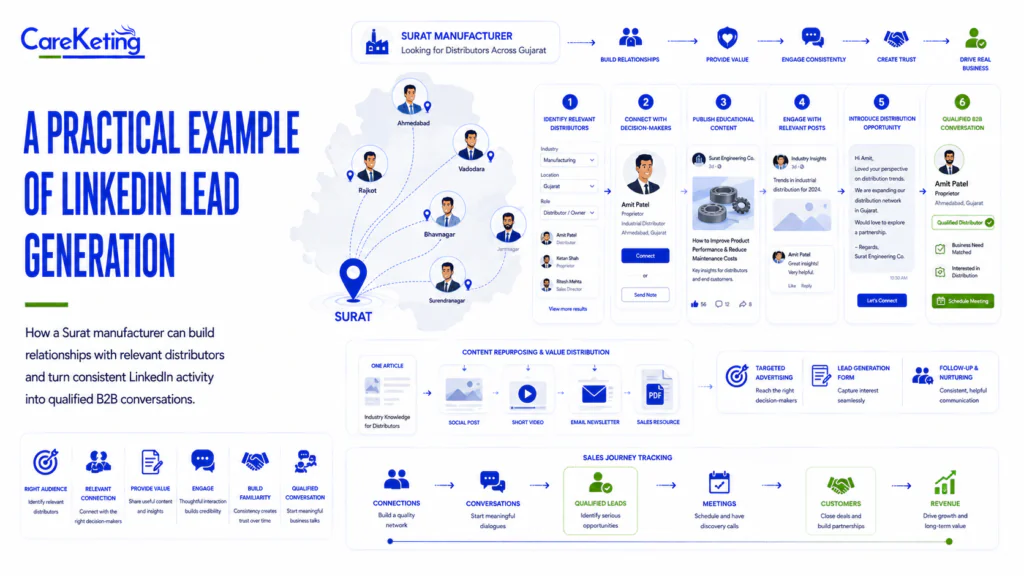
Consider a Surat based manufacturer that wants distributors in Gujarat and nearby markets.
Instead of targeting everyone, the business can identify distributors in relevant industries, connect with decision makers, publish educational product content, engage with relevant posts, and gradually introduce its distribution opportunity.
The important part is consistency. The company is not simply asking strangers to buy something. It is building familiarity and giving prospects enough information to decide whether a conversation makes sense.
Common LinkedIn Lead Generation Mistakes
Sending the Same Message to Everyone
A copied message can make outreach feel automated and irrelevant.
Focusing Only on Connections
A large network does not automatically mean a strong pipeline.
Talking Only About Your Company
Useful content should address customer problems, not constantly promote the service provider.
Ignoring Follow Up
A prospect who does not respond today may still become relevant later. Follow up respectfully and give them a reason to continue the conversation.
Measuring Vanity Metrics
Likes and impressions can provide context, but qualified opportunities and revenue are stronger business metrics.
Frequently Asked Questions
Is LinkedIn good for B2B lead generation?
Yes. LinkedIn can be particularly useful for B2B businesses because professionals and decision makers are easier to identify by industry, role, company, and professional background.
How does lead generation in LinkedIn work?
It generally involves identifying the right prospects, building connections, sharing useful content, starting relevant conversations, qualifying prospects, and moving suitable opportunities into the sales process.
How can I generate B2B leads on LinkedIn?
Start with a specific customer profile, optimize your profile, connect with relevant prospects, publish useful content, personalize outreach, and consistently follow up.
Is LinkedIn advertising expensive?
The cost depends on the audience, campaign objective, competition, and advertising format. Businesses should evaluate LinkedIn advertising based on qualified leads and business outcomes rather than clicks alone.
Should I use LinkedIn Sales Navigator?
It can be useful for businesses that conduct regular B2B prospecting and need more advanced ways to identify and organize potential prospects.
How often should I post on LinkedIn?
There is no universal posting frequency. A consistent schedule with genuinely useful content is generally more valuable than publishing frequently without a clear purpose.
Conclusion
Lead generation in LinkedIn works best when treated as a relationship and sales process rather than a simple messaging exercise.
The strongest results usually come from combining accurate prospect targeting, a credible profile, useful content, personalized outreach, patient follow up, and proper measurement.
For a B2B company, the goal should not be to collect the largest possible number of connections. The goal is to create conversations with people who have a genuine reason to consider what you offer.
Before starting your next LinkedIn campaign, define your ideal B2B customer and write down the specific problem you want to solve for them. That foundation will make every other part of your LinkedIn strategy more focused.