
Content Marketing for Lead Generation: Strategies, Types & Best Practices
A practical guide to using useful content to attract the right audience, capture qualified leads, build trust, and support sales.
Introduction
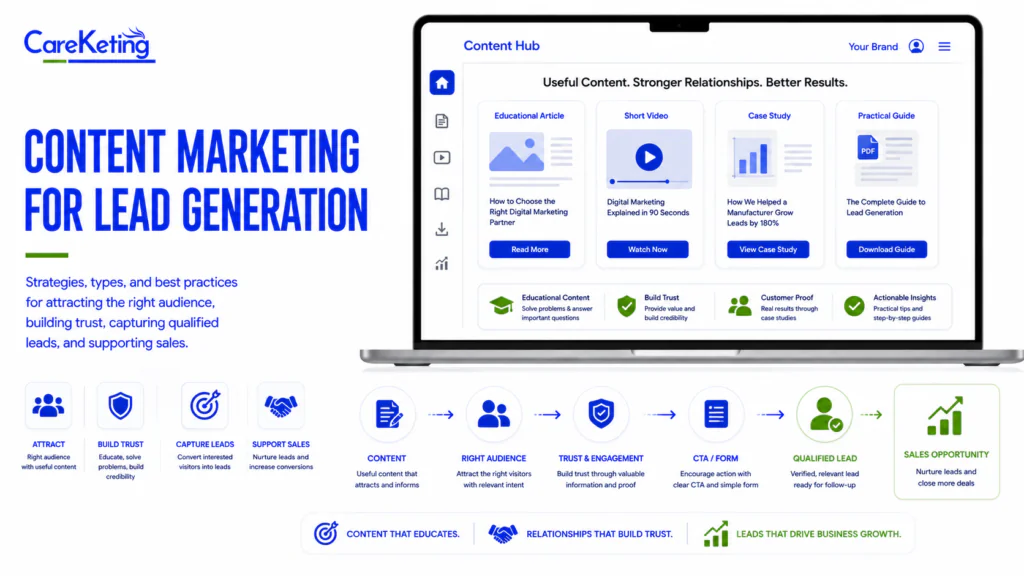
Many businesses create blog posts, videos, social media posts, and guides but still struggle to generate enquiries. The problem is often not the amount of content. It is the connection between content and the buying process.
Content marketing lead generation focuses on creating useful information that attracts people with a genuine business problem and gradually moves them toward an enquiry or purchase.
For example, an industrial equipment manufacturer could publish a guide explaining how buyers should compare different machine specifications. A reader who finds the guide through Google may later download a product catalogue or request a quotation. That is content marketing lead generation working as part of a larger sales process.
Table of Contents
What Is Content Marketing Lead Generation?
Content marketing lead generation is the process of using valuable and relevant content to attract potential customers and encourage them to take an action that can begin a business relationship.
That action might be:
- Downloading an ebook
- Filling out a contact form
- Requesting a quotation
- Booking a consultation
- Subscribing to an email list
- Sending a WhatsApp message
- Registering for a webinar
The important difference is intent. A person reading a random social media post may have little buying interest. Someone searching for a solution to a specific business problem is often much closer to becoming a qualified lead.
How Content Marketing Generates Leads
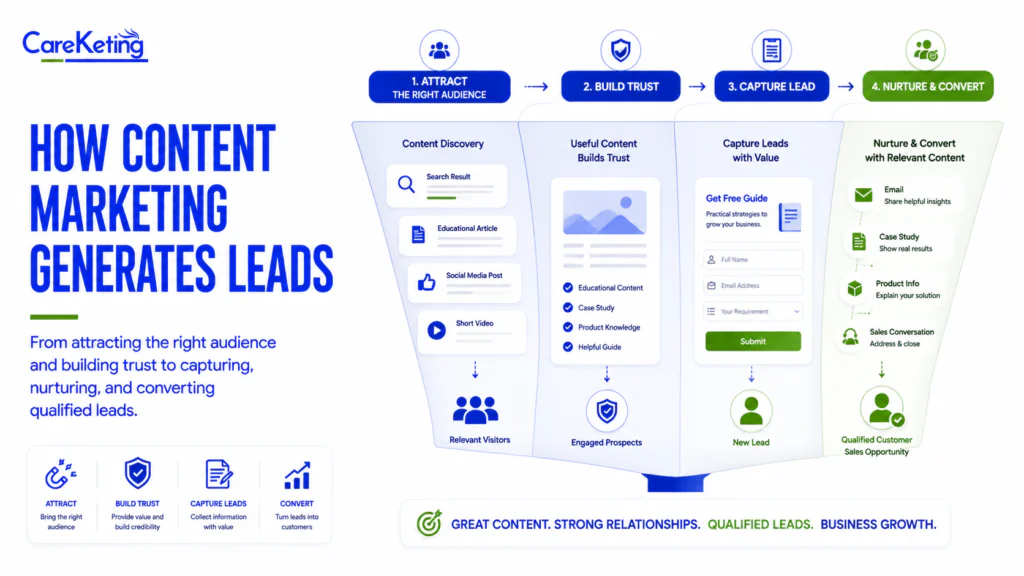
A simple content marketing funnel can be understood in four stages.
1. Attract the Right Audience
The first goal is to reach people who have problems your business can solve.
SEO content, social media content, videos, guides, and educational articles can bring relevant visitors through search and social channels.
2. Build Trust
People rarely buy expensive products or services after seeing one piece of content.
Useful educational content can demonstrate knowledge and answer questions before a sales conversation begins.
3. Capture the Lead
Once a visitor is interested, provide a clear next step.
A landing page might offer a product catalogue, industry report, checklist, consultation, or quotation request in exchange for relevant contact information.
4. Nurture and Convert
Not every visitor is ready to buy immediately.
Email marketing, useful follow up content, case studies, and product information can support lead nurturing until the prospect is ready for a sales conversation.
Types of Content for Lead Generation
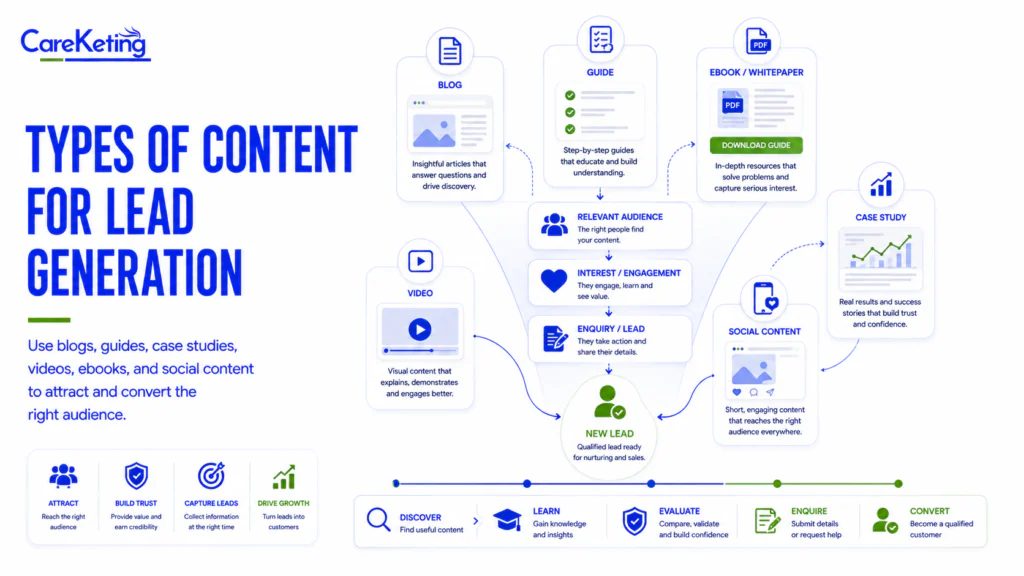
Different stages of the customer journey require different types of content.
Blog Content
Blog articles can answer questions people search for on Google.
For example, an accounting firm could publish an article explaining common GST mistakes made by small businesses.
Educational Guides
Detailed guides can help establish expertise while answering important customer questions.
Ebooks and Whitepapers
Longer resources can work well as lead magnets, particularly in B2B content marketing.
A manufacturer could offer a downloadable purchasing guide that requires visitors to submit basic business information.
Case Studies
Case studies show how a problem was approached and what happened afterward. They can be especially useful when prospects are comparing suppliers.
Video Content
Short videos can demonstrate products, explain processes, answer common questions, or introduce experts from the company.
Social Media Content
Social platforms can distribute educational content and create additional opportunities for audience engagement.
7 Content Marketing Strategies for Lead Generation
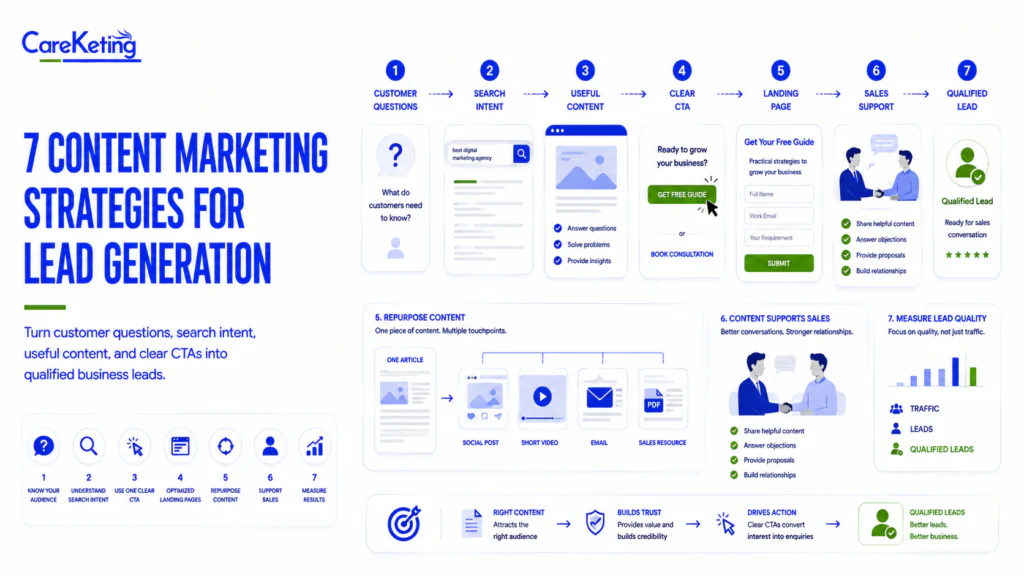
1. Start With Customer Questions
Do not begin with “What should we post this week?”
Start with questions customers actually ask salespeople.
These questions often make excellent blog topics, videos, guides, and FAQs.
2. Create Content Around Search Intent
A person searching “what is industrial automation” has a different intent from someone searching “industrial automation supplier near me.”
Your content should match the stage of the customer journey.
3. Use One Clear Call to Action
Do not give visitors five competing choices.
If the article is designed to generate enquiries, make the next step obvious.
4. Connect Content With Landing Pages
A blog post can attract visitors, while a relevant landing page can capture them.
For example, an article about selecting commercial machinery could lead to a machinery consultation form.
5. Repurpose Strong Content
One useful article can become several social media posts, a short video, an email, and a sales resource.
This makes content creation more efficient without simply publishing the same message everywhere.
6. Use Content to Support Sales
Your sales team can share relevant guides, case studies, product comparisons, and educational resources during conversations.
This makes content part of the sales process rather than a separate marketing activity.
7. Measure Leads, Not Just Traffic
Website traffic is useful, but it does not automatically create revenue.
Track:
- Organic traffic
- Content generated leads
- Landing page conversion rate
- Cost per lead
- Qualified leads
- Lead to customer conversion
- Revenue influenced by content
A page attracting 500 visitors and producing 20 qualified enquiries can be more valuable than a page attracting 10,000 visitors with almost no business impact.
Common Content Marketing Mistakes
Creating Content Without a Customer
Some businesses publish topics that have little connection to their products or customers.
Focusing Only on Keywords
SEO matters, but an article written only to include keywords often becomes difficult to read.
Weak Calls to Action
If the reader finishes the article without knowing what to do next, the content may fail to generate leads.
Expecting Immediate Results
Content often takes time to build search visibility, trust, and an audience. It should be evaluated over a realistic period rather than after a few days.
Frequently Asked Questions
What is content marketing lead generation?
It is the use of useful and relevant content to attract potential customers, build trust, capture their information, and move them toward a buying decision.
How does content marketing generate leads?
Content attracts relevant visitors through search, social media, email, and other channels. A strong offer or call to action then encourages interested visitors to become leads.
What type of content generates the most leads?
There is no universal winner. Guides, case studies, product comparisons, webinars, ebooks, and problem focused blog content can work well depending on the audience and industry.
Is SEO important for content marketing lead generation?
Yes. SEO can help useful content reach people who are actively searching for solutions, making organic traffic an important source of potential leads.
How long does content marketing take to generate leads?
Results vary by industry, competition, content quality, website authority, distribution, and search demand. Some content can generate enquiries quickly, while SEO focused content may take considerably longer.
Can small businesses use content marketing for lead generation?
Yes. Small businesses can start with customer questions, practical guides, case studies, and useful website content without creating a large content operation.
Conclusion
Content marketing lead generation works when content is connected to a real customer problem and a clear business objective.
The goal is not to publish as much as possible. It is to create useful information that attracts the right people, answers their questions, builds confidence, and gives them a sensible reason to take the next step.
For a small business or B2B company, even a focused library of genuinely useful content can become a long term source of qualified leads when supported by SEO, distribution, strong landing pages, and consistent follow up.
Start by listing the ten questions your sales team hears most often. Those questions can become the foundation of a practical content marketing plan designed around real customer needs.