
Digital Marketing Examples: 20 Practical Strategies, Campaigns and Use Cases
Practical digital marketing examples showing how businesses use SEO, social media, content, email, paid advertising, video, and other online channels to attract and convert customers.
Introduction
Looking at digital marketing examples is often easier than learning marketing concepts from definitions alone. When you see how a manufacturer generates distributor enquiries, how a local restaurant attracts nearby customers, or how an ecommerce business brings back abandoned shoppers, the role of each digital channel becomes much clearer.
Digital marketing is not one fixed activity. It is a combination of methods that can help a business attract attention, educate potential customers, generate enquiries, build trust, and increase sales.
The following digital marketing examples are based on practical business situations rather than unrealistic claims. They can help beginners understand how different channels work and how experienced marketers think about choosing the right approach.
Table of Contents
Why Digital Marketing Examples Matter
The best strategy depends on the customer and the business objective.
A local business may need calls and store visits. A manufacturer may need distributors. An ecommerce brand may need online sales. A professional service provider may need qualified enquiries.
That is why digital marketing examples for businesses should be viewed as ideas to adapt, not formulas to copy.
20 Practical Digital Marketing Examples
1. SEO Blog Content
A marketing agency publishes articles answering questions potential clients search for. This can attract relevant organic traffic over time.
2. Local SEO
A dental clinic optimizes its Google Business Profile, website, and local content to become easier to find in nearby searches.
3. Search Advertising
A home repair company runs paid search advertisements for people actively searching for repair services in its service area.
4. Social Media Marketing
A restaurant publishes food photographs, customer reviews, short videos, and location focused content to build awareness and encourage visits.
5. Meta Lead Campaign
A lubricant manufacturer runs Facebook and Instagram advertisements targeting distributors and collects enquiries through a lead form.
6. Content Marketing
A machinery company creates guides explaining how buyers should select equipment. The content helps potential customers understand the purchase before contacting sales.
7. Email Newsletter
A B2B company sends useful industry updates, product information, and company news to existing customers and prospects.
8. Email Follow Up
A business sends a sequence of helpful emails after someone downloads a product guide. The objective is to keep the company relevant while the prospect evaluates options.
9. Video Marketing
A manufacturer creates a short product demonstration showing how its equipment operates. This can communicate information that may take several paragraphs to explain.
10. Customer Testimonial Content
A service business turns genuine customer feedback into social media posts and website content to provide potential buyers with additional proof.
11. Remarketing
An ecommerce store shows relevant advertisements to people who viewed products but did not complete their purchase.
12. Influencer Marketing
A fitness brand works with a creator whose audience matches its target customers rather than choosing a creator only because of a large follower count.
13. Affiliate Marketing
An online business gives selected partners a trackable referral arrangement so partners can promote products and receive compensation for successful sales.
14. Paid Social Advertising
A local real estate company uses targeted social advertising to introduce a property project to people in selected locations and audience groups.
15. Search Engine Marketing
A software company targets commercial search terms where potential customers are actively comparing solutions.
16. Mobile Marketing
A retail business uses SMS messages to inform existing customers about a relevant offer or important service update.
17. Ecommerce Product Advertising
An online store promotes specific products through shopping advertisements when users are searching for similar products.
18. B2B LinkedIn Content
A manufacturer shares industry knowledge, product applications, and business insights on LinkedIn to remain visible among potential buyers and partners.
19. Free Educational Resource
A financial service company creates a simple guide explaining common loan requirements. Visitors can access it after submitting their contact information.
20. Online Review Strategy
A local service business consistently asks genuine customers for feedback and responds professionally to reviews. This supports trust during the research stage.
How to Choose the Right Strategy
These digital marketing examples show that there is no universal best channel.
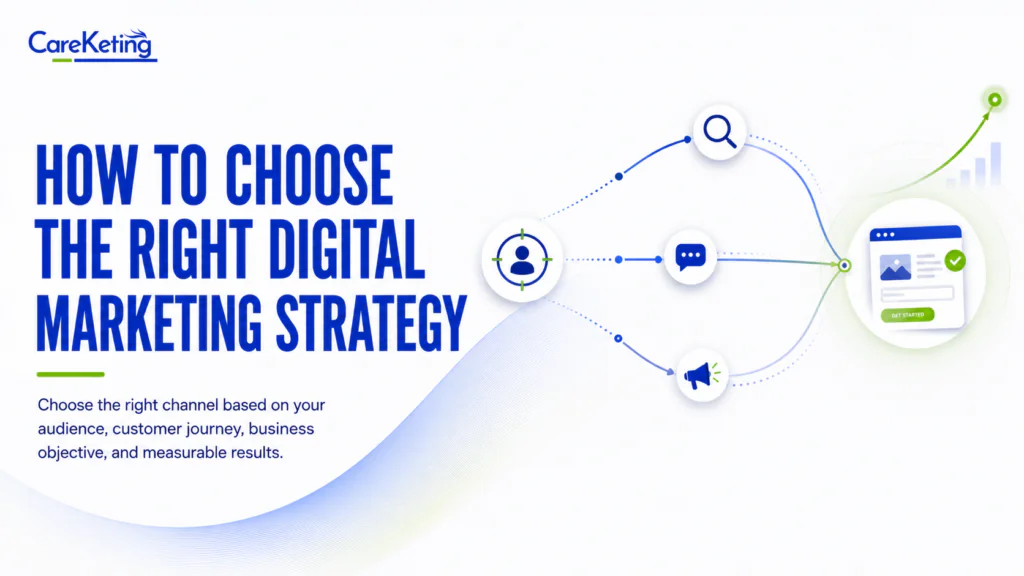
Start with the customer journey. Ask where your customers search, what information they need, how they compare options, and what usually makes them contact a business.
Then connect the channel with a measurable objective.
For example, SEO may be suitable for long term search visibility, while paid advertising can help generate faster traffic. Social media may
Common Mistakes
One common mistake is copying competitors without understanding why their strategy works.
Another is trying to use every channel at once. A small business may get better results by doing two channels properly rather than maintaining six poorly.
Businesses also often focus on clicks and impressions without checking whether those visitors become qualified leads or customers.
Good digital marketing strategies examples should therefore be judged by business relevance, not simply by how impressive the campaign looks.
Frequently Asked Questions
What are digital marketing examples?
Digital marketing examples include SEO, search advertising, social media marketing, email campaigns, content marketing, video marketing, influencer marketing, remarketing, and online advertising.
What are some digital marketing examples for small businesses?
Small businesses can use local SEO, social media, customer reviews, search advertising, email marketing, educational content, and targeted lead campaigns.
What are B2B digital marketing examples?
B2B examples include LinkedIn content, SEO, industry guides, distributor lead campaigns, email nurturing, case studies, and targeted advertising.
What are digital advertising examples?
Digital advertising examples include search ads, social media advertisements, display advertising, shopping advertisements, and remarketing campaigns.
Which digital marketing strategy is best?
There is no single best strategy. The right approach depends on the target audience, product, sales cycle, budget, location, and business objective.
Conclusion
These digital marketing examples demonstrate an important principle: effective marketing starts with the customer rather than the platform.
A manufacturer, local business, ecommerce store, and professional service provider may all use digital channels, but their strategies should look very different.
The most useful approach is to identify the business objective first, understand the audience, choose suitable channels, create relevant communication, and measure meaningful outcomes.
Digital marketing works best when every activity has a clear purpose. More posts, more traffic, or more advertising spend do not automatically produce better results.
Before planning your next campaign, choose one business objective and identify the customer action you want to influence. Then select the digital channel that gives you the best opportunity to achieve it.