
Digital Marketing Project: 15 Project Ideas, Examples & Practical Topics
Explore practical digital marketing projects that help beginners and professionals build real skills, understand campaigns, and create a stronger marketing portfolio.
Introduction
Learning digital marketing becomes much easier when you stop studying only theory and start working on a real digital marketing project.
A practical project forces you to make decisions about audiences, keywords, content, advertising budgets, competitors, conversion goals, and performance measurement. These are the same areas marketers deal with when working for actual businesses.
For students, beginners, and marketing professionals building a portfolio, practical projects can also demonstrate what you can actually do. Instead of simply saying you understand SEO or social media marketing, you can show the research, strategy, execution, and results behind your work.
Here are 15 practical digital marketing project ideas that can be adapted for different industries and skill levels.
Table of Contents
Why Is a Digital Marketing Project Important?
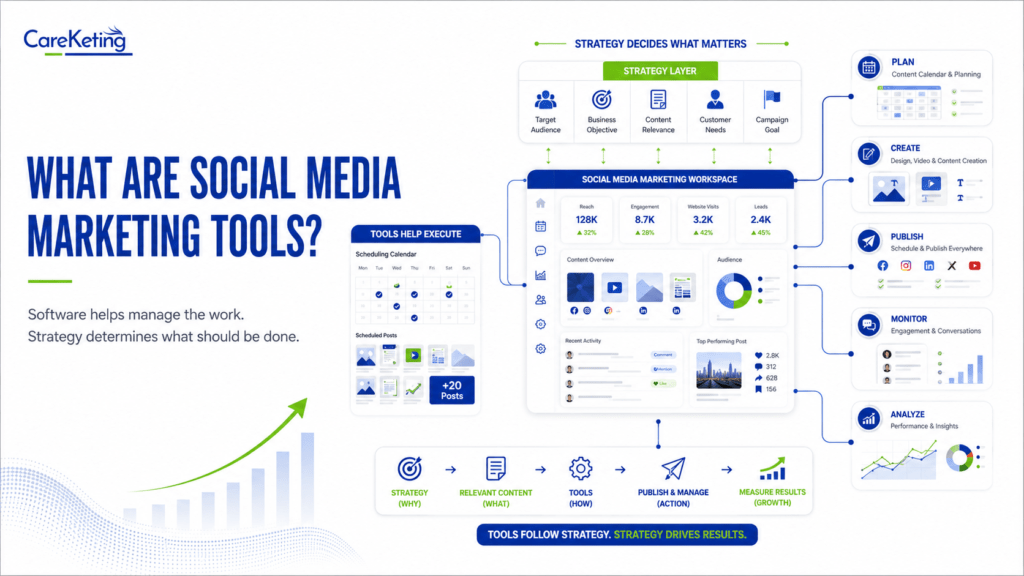
A good project connects several marketing activities to a specific business objective.
For example, a project for a local service company could involve keyword research, competitor analysis, website optimization, content creation, Google Business Profile optimization, and lead tracking.
This gives you a much better understanding of how different digital marketing channels work together.
At CareKeting, practical campaign work across manufacturing, financial services, real estate, agriculture, and local businesses has shown an important principle: marketing decisions become more useful when they are connected to a real business problem.
15 Digital Marketing Project Ideas
1. SEO Website Project
Choose a small business website and develop an SEO improvement plan.
Study its technical health, keyword opportunities, existing content, internal linking, and search visibility.
Project output: SEO audit, keyword map, content plan, and optimization recommendations.
2. Keyword Research Project
Select a business category and research informational, commercial, and local search terms.
Group keywords according to search intent and map them to relevant website pages.
This is a useful beginner project because it teaches how people search before they become customers.
3. Competitor Analysis Project
Select three to five competitors and compare their websites, content, SEO visibility, social media presence, offers, and advertising approach.
The goal is not to copy them. Identify gaps that could create opportunities for your business.
4. Social Media Marketing Project
Create a 30 day social media strategy for a real or hypothetical business.
Include audience research, content pillars, post formats, publishing frequency, and measurement criteria.
5. Content Marketing Project
Build a content strategy around a specific customer problem.
For example, a manufacturing company could create educational articles answering common procurement and product selection questions.
6. Lead Generation Project
Design a campaign intended to generate qualified enquiries.
Include audience definition, advertising channel, creative concept, landing page, lead form, follow up process, and performance metrics.
7. PPC Marketing Project
Create a sample paid search campaign for a business.
Research commercial keywords, write advertisements, organize campaigns, define landing pages, and establish a realistic budget.
8. Social Media Advertising Project
Build a hypothetical Meta advertising campaign for a local or B2B business.
Document the audience, campaign objective, creative variations, budget, lead capture method, and expected KPIs.
9. Email Marketing Project
Create an email sequence for a fictional customer journey.
For example, you could design a welcome email, educational email, product information email, and follow up email.
This project helps demonstrate customer nurturing skills.
10. Website Marketing Project
Review a business website from a marketing perspective.
Evaluate its navigation, messaging, calls to action, service pages, forms, trust signals, mobile experience, and conversion opportunities.
11. Marketing Analytics Project
Create a reporting framework that tracks website traffic, leads, conversion rate, acquisition cost, campaign performance, and revenue.
The objective is to understand not just what happened, but why performance changed.
12. Digital Marketing Funnel Project
Map the complete customer journey from awareness to conversion.
Identify suitable content and channels for each stage and explain how prospects should move from one stage to another.
13. Local Digital Marketing Project
Choose a local business such as a clinic, restaurant, service provider, or retailer.
Develop a strategy covering local SEO, Google Business Profile optimization, reviews, location based content, and local advertising.
14. Ecommerce Marketing Project
Create a marketing plan for an online store.
Study product pages, search opportunities, social media content, paid advertising, remarketing, email campaigns, and conversion optimization.
15. Complete Digital Marketing Strategy Project
For an advanced project, combine several channels into one complete plan.
Include:
- Business research
- Target audience
- Competitor analysis
- Marketing objectives
- SEO strategy
- Content strategy
- Social media
- Paid advertising
- Lead generation
- Conversion optimization
- Analytics
- Budget
- KPIs
This type of digital marketing project can become a strong portfolio piece because it demonstrates strategic thinking rather than knowledge of only one channel.
How to Choose the Right Digital Marketing Project
Choose a project based on what you want to learn.
If you are interested in SEO, start with keyword research, competitor analysis, and website optimization.
If paid advertising interests you, work on PPC or social media advertising.
If you want broader marketing experience, build a complete strategy around a real business.
Most importantly, define the objective before starting. “Improve marketing” is too broad. “Generate qualified enquiries from local customers” gives the project a clear direction.
Common Digital Marketing Project Mistakes
Focusing Only on Theory
A project should involve actual research, decisions, and recommendations.
Choosing Too Many Channels
Beginners often try to cover every marketing platform. A focused project is usually more useful.
Ignoring Measurement
Every project should define how success will be evaluated.
Making Unsupported Claims
If you do not have actual campaign data, clearly label projections and assumptions. Do not present estimated results as real performance.
Copying Existing Case Studies
Use real businesses for research, but create your own analysis and recommendations.
Frequently Asked Questions
What is a digital marketing project?
A digital marketing project is a practical assignment or business exercise involving activities such as SEO, content marketing, social media, advertising, lead generation, or marketing analytics.
Which digital marketing project is best for beginners?
Keyword research, competitor analysis, social media planning, and basic SEO audits are good starting points because they teach fundamental marketing concepts without requiring a large budget.
How can I create a digital marketing project for my portfolio?
Choose a business problem, research the market, define an objective, create a strategy, document your execution or recommendations, and present the measurement framework and results clearly.
Can a digital marketing project be based on a real business?
Yes. Working with a real business can make the project more practical, provided you have appropriate permission to use its information and clearly distinguish actual results from projections.
What should a digital marketing project include?
A strong project can include business research, audience analysis, competitor research, objectives, channel strategy, execution plan, budget, KPIs, measurement, and recommendations.
Conclusion
A well planned digital marketing project is more than an academic exercise. It gives you an opportunity to understand how marketing decisions are made in practical situations.
Whether you choose SEO, social media, PPC, content marketing, lead generation, analytics, or a complete strategy, focus on solving a specific business problem.
The strongest projects are not necessarily the most complicated. They are the ones where the research is clear, the strategy has a logical reason behind it, and the results can be measured honestly.
Choose one business you understand and build a small project around a single marketing objective. Document every major decision so the final work becomes something you can actually show in your portfolio.