
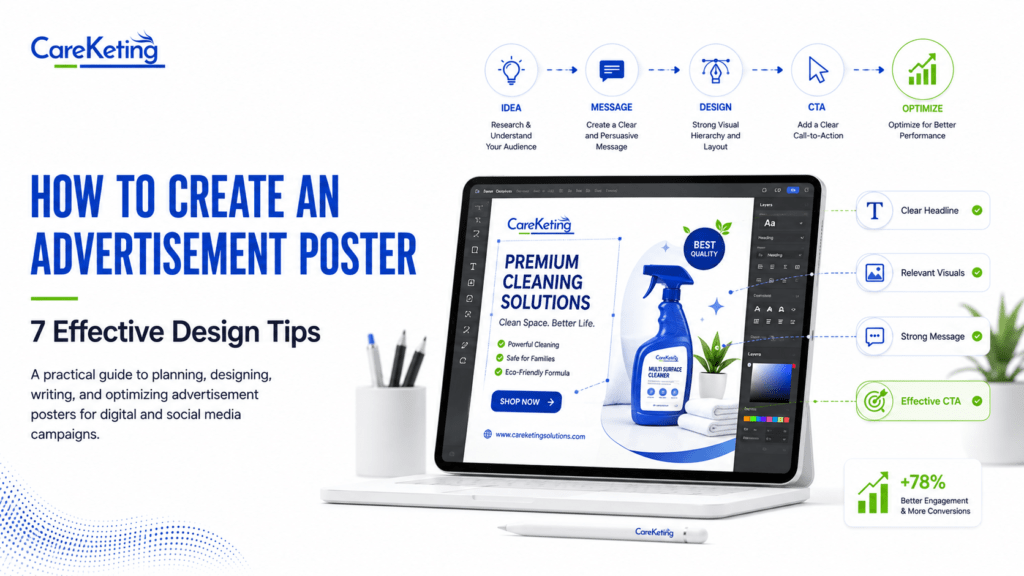
How to Create an Advertisement Poster: 7 Effective Design Tips
A practical guide to planning, designing, writing, and optimizing advertisement posters for digital and social media campaigns.
Introduction
A good advertisement poster should not make people work to understand it. Someone scrolling through Instagram or Facebook may see your design for only a few seconds. In that short moment, the poster needs to communicate what you are offering, who it is for, and what the viewer should do next.
That is why how to create an advertisement poster is not only a design question. It is a communication and marketing question.
A poster can look attractive and still produce poor results if the headline is unclear, the offer gets buried, or there is no obvious next step. From practical digital marketing work, one pattern appears repeatedly: simple and focused creatives often perform better than designs that try to say everything at once.
Table of Contents
What Makes an Advertisement Poster Effective?
Before learning how to create an advertisement poster, understand what the design needs to accomplish.
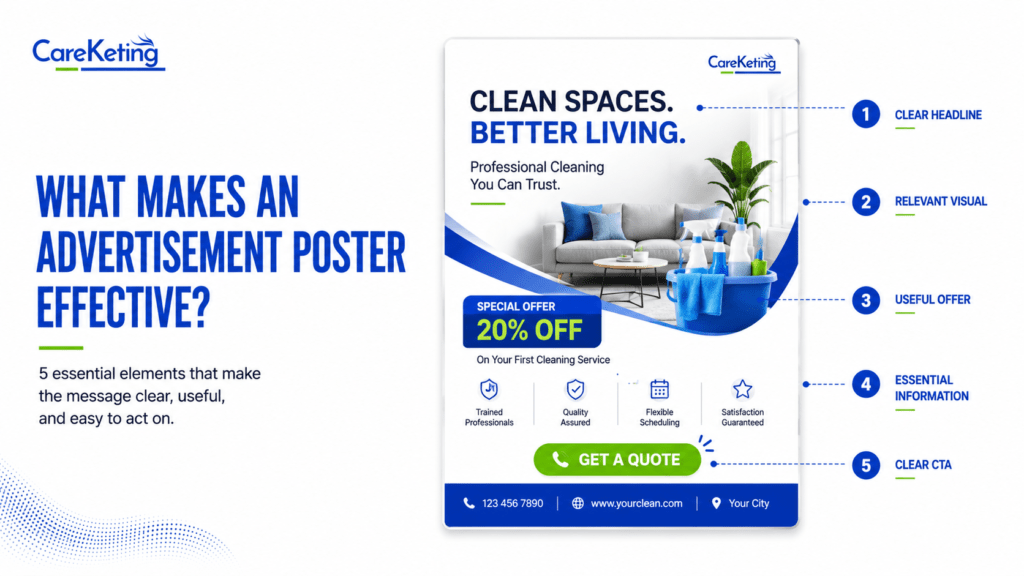
An effective poster usually has five important elements:
- A clear headline: Tell the viewer what the advertisement is about.
- A relevant visual: Use an image or graphic that supports the message.
- A useful offer: Explain the product, service, benefit, or reason to respond.
- Supporting information: Include only the details necessary for understanding.
- A clear call to action: Tell people what to do next, such as Call Now, Get a Quote, Book a Consultation, or Enquire Today.
The goal is not to fill every available space. The goal is to make the important information easy to notice.
How to Create an Advertisement Poster Step by Step
Learning how to create an advertisement poster becomes much easier when you stop thinking about design first.
Start with strategy.
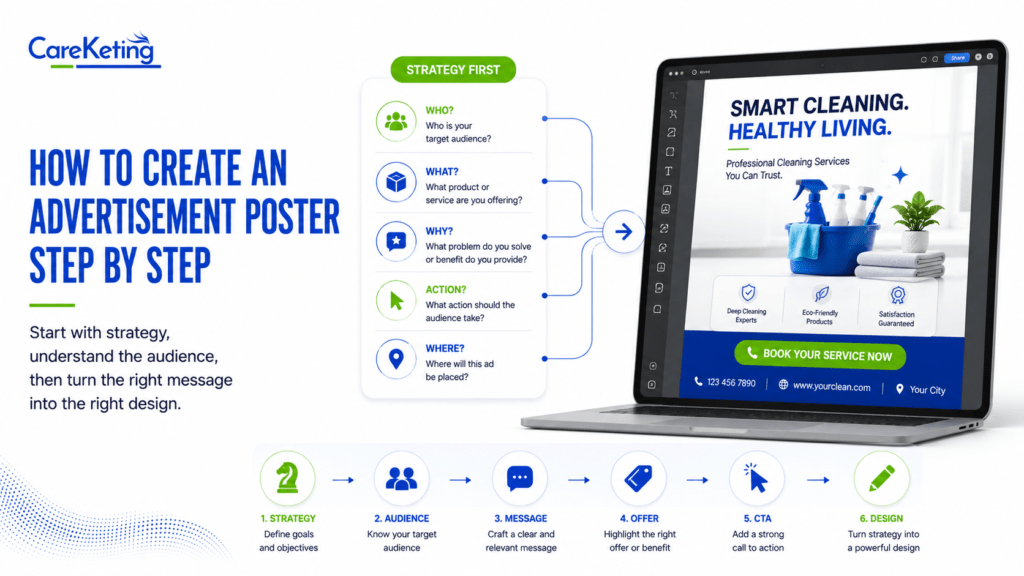
Before opening Canva, Photoshop, Illustrator, or any other design software, answer a few basic questions:
Who is the poster for?
What are you promoting?
What problem does it solve?
Why should someone care?
What action should the viewer take?
Where will the poster appear?
These questions influence every design decision that follows.
A common mistake is to begin by selecting colors, fonts, and images. Design tools make that tempting, but strategy should come first.
How to Create an Advertisement Poster Step by Step
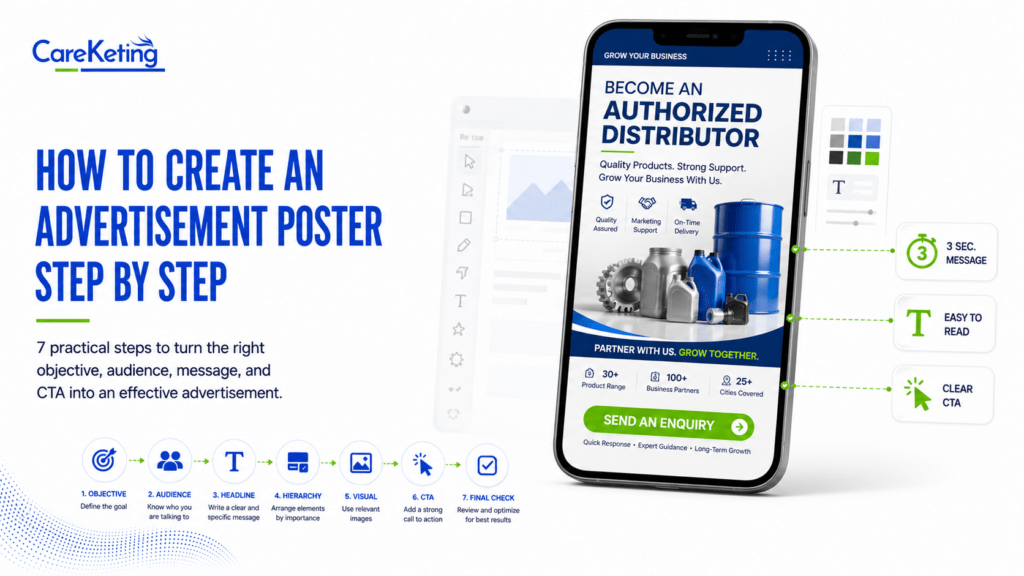
1. Start With One Clear Objective
The first step in how to create an advertisement poster is deciding what action you want from the audience.
Are you generating leads, promoting a product, announcing an offer, attracting distributors, or building awareness?
For example, a manufacturing company looking for distributors needs a different poster from a local restaurant promoting a weekend offer.
2. Know Who Will See It
Design decisions should come after audience research.
A poster for business owners may need a professional visual and a direct commercial message. A poster for younger consumers may use a more visual and conversational approach.
The audience should influence the headline, imagery, language, and offer.
3. Write the Headline First
One of the simplest rules in how to create an advertisement poster is to write the message before worrying about colors and effects.
Instead of:
Premium Quality Products Available
Try:
Become an Authorized Distributor
The second headline tells the reader exactly why the advertisement matters.
A strong headline is usually specific, benefit focused, and easy to understand.
4. Build a Simple Visual Hierarchy
Your viewer should naturally notice the headline first, then the main visual or offer, and finally the supporting information and call to action.
Use differences in font size, spacing, alignment, and contrast to establish this order.
Do not give every element the same visual importance. When everything looks important, nothing stands out.
5. Use Images That Support the Message
A product poster should show the product clearly. A service advertisement might use a relevant professional image. A B2B campaign may benefit from photographs of products, machinery, people, or real business environments.
For how to create an advertisement poster effectively, avoid decorative images that have no connection with the offer.
6. Add a Direct Call to Action
The audience should not have to guess what to do.
Use specific actions such as:
Call Now
Send an Enquiry
Get a Free Consultation
Apply Today
Request a Quote
The right CTA depends on the buying stage and the campaign objective.
7. Check the Poster Before Publishing
Before launching the design, review it on a phone because many social media users will see it on a small screen.
Ask yourself three questions:
Can I understand the offer in three seconds?
Can I read the important text without zooming?
Do I know what action to take?
This final review is an important part of how to create an advertisement poster because a design that works on a large desktop screen may not work on mobile.
Common Advertisement Poster Mistakes
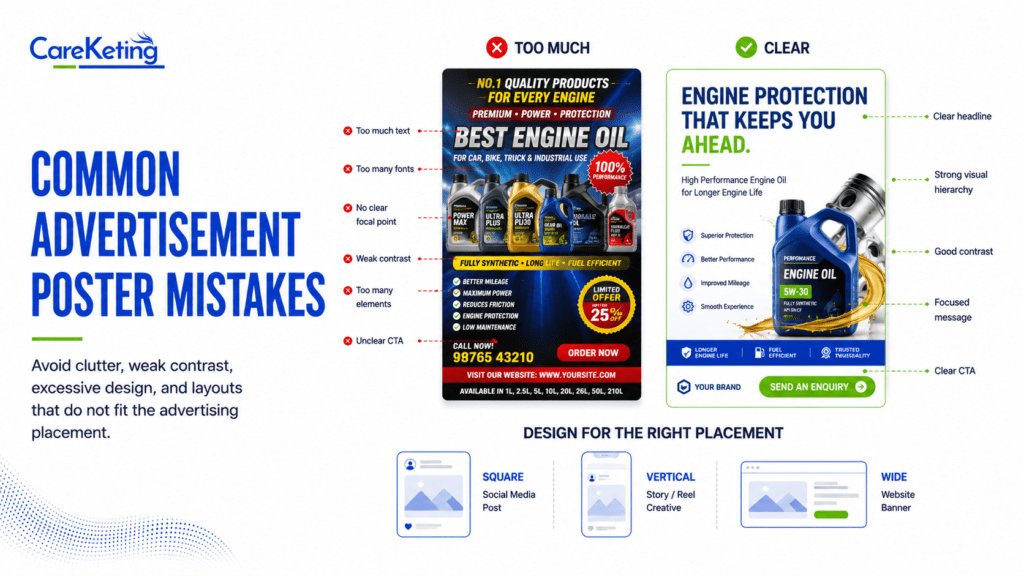
A frequent problem is adding too much information. Businesses often try to include every product feature, contact detail, benefit, and company description in one creative.
Another common mistake is using too many fonts or visual effects. This can make the poster look busy and reduce readability.
Low contrast is another issue, especially when text is placed over detailed images.
For online advertising, businesses should also create designs according to the placement. A square social media poster, story creative, website banner, and print poster may need different layouts.
Advertisement Poster Example
Imagine a lubricant manufacturer wants distributor enquiries.
A weak poster might simply say:
High Quality Lubricants Available
A stronger version could say:
Looking for Lubricant Distributorship?
150 Plus Product Range
Distributor Support
Enquire Now
The second approach gives the audience a reason to stop, understand the offer, and respond.
This is also where online advertising and design strategy meet. The creative should attract attention, but the message must qualify the right audience.
Best Practices for Online Advertising
When using posters for online advertising, design for the platform first.
Keep important text away from areas that may be covered by platform controls. Use readable fonts and strong contrast. Maintain consistent branding across different creatives so people can recognize the business.
Most importantly, test your designs. A poster that looks impressive to the internal team may not necessarily produce better clicks or leads. Performance data should influence future creative decisions.
Frequently Asked Questions
How to create an advertisement poster for social media?
Start with one objective, identify the audience, write a strong headline, use one relevant visual, keep supporting text short, and finish with a clear call to action.
How to create an advertisement poster for a small business?
Focus on one product or service, highlight its main benefit, mention the relevant location or offer, and make contacting the business easy.
What size should an advertisement poster be for social media?
The ideal size depends on the platform and placement. Before designing, check the current recommended dimensions for the specific placement.
What should an advertisement poster contain?
A strong poster generally needs a headline, relevant visual, key benefit or offer, essential supporting information, branding, and a clear call to action.
Can I use Canva to create an advertisement poster?
Yes. Canva can be useful for beginners because it provides templates and simple editing tools. However, the strategy and message should come before the template.
Conclusion
Learning how to create an advertisement poster becomes much easier when you stop treating the poster as only a graphic design project.
The strongest advertisements begin with a clear objective, a specific audience, a useful message, and a focused visual structure. Design then supports that message rather than competing with it.
Whether you are promoting a local service, selling products, generating B2B enquiries, or running online advertising campaigns, the same principle applies: make the right message easy for the right person to understand.