
Social Media Marketing: Meaning, Benefits, Types and How It Works
A simple guide to understanding social media marketing, its objectives, major types, practical examples, and how businesses can use it effectively
Introduction
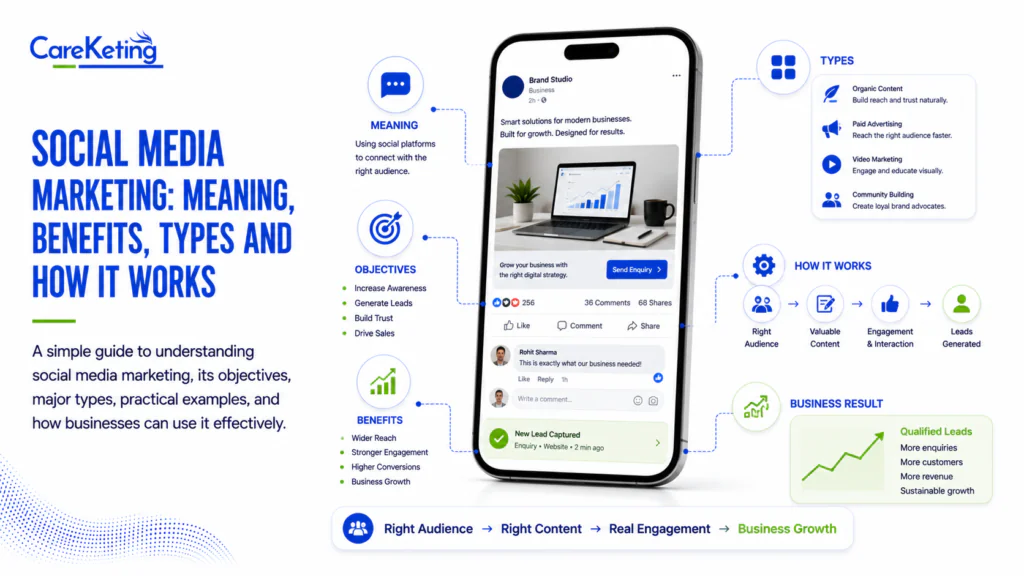
If you have ever wondered about social media marketing meaning, the simplest explanation is this: it is the process of using social media platforms to promote a business, build relationships with customers, generate enquiries, and support business growth.
For a small business, social media marketing may mean posting useful content on Instagram. For a manufacturer, it could mean generating distributor enquiries through Facebook and Instagram ads. For a local service business, it might involve building trust through customer reviews, educational videos, and regular updates.
The important point is that social media marketing is not simply about posting every day. It is about using social platforms with a clear business purpose.
Table of Contents
What Is Social Media Marketing?
Social media marketing is a form of digital marketing where businesses use platforms such as Facebook, Instagram, LinkedIn, YouTube, and other social networks to communicate with their target audience.
The social media marketing concept is based on two way communication. A business shares content, customers respond, ask questions, compare options, and sometimes become buyers.
For example, a manufacturer may use LinkedIn to connect with distributors, Instagram to showcase products, and Meta Ads to generate direct enquiries. Each platform can serve a different purpose.
A useful way to understand it is:
Content + Audience + Communication + Measurement = Social Media Marketing
How Social Media Marketing Works
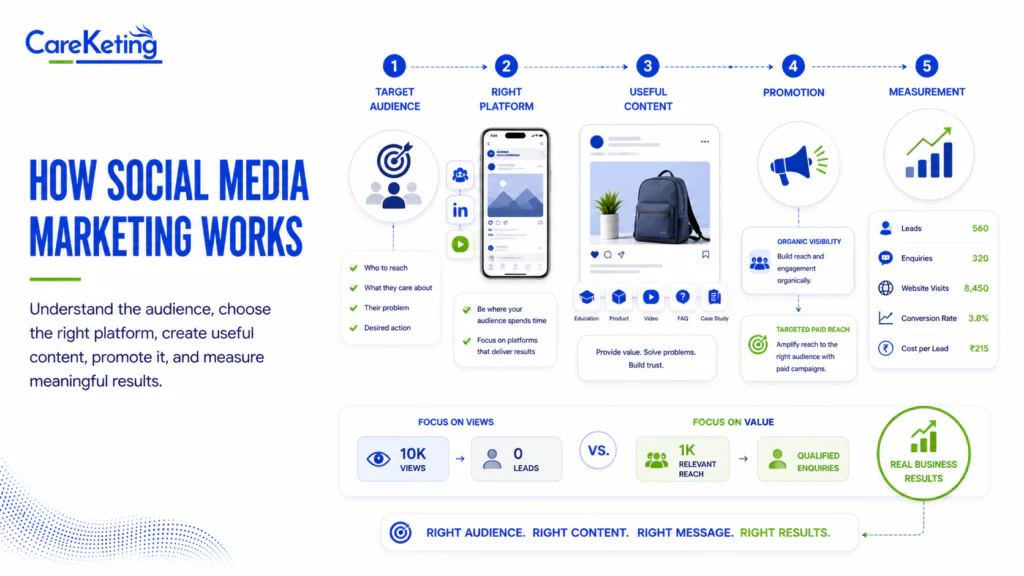
Effective social media marketing usually starts with understanding the audience.
A business needs to know who it wants to reach, what those people care about, what problem they are facing, and what action the business wants them to take.
The process generally involves:
1. Identifying the target audience
A manufacturer selling industrial products will have a very different audience from a dentist or a clothing store.
2. Choosing suitable platforms
Being present everywhere is not necessary. The right platform depends on where the target customers spend their time.
3. Creating useful content
Content can include educational posts, product demonstrations, videos, customer stories, FAQs, case studies, and offers.
4. Promoting the content
Organic content can build visibility over time, while paid advertising can help businesses reach specific audiences faster.
5. Measuring performance
Businesses should track meaningful metrics such as enquiries, leads, website visits, engagement, conversion rate, and cost per lead.
This last step is often overlooked. A post receiving thousands of views is not automatically successful if it generates no business value.
Social Media Marketing Objectives
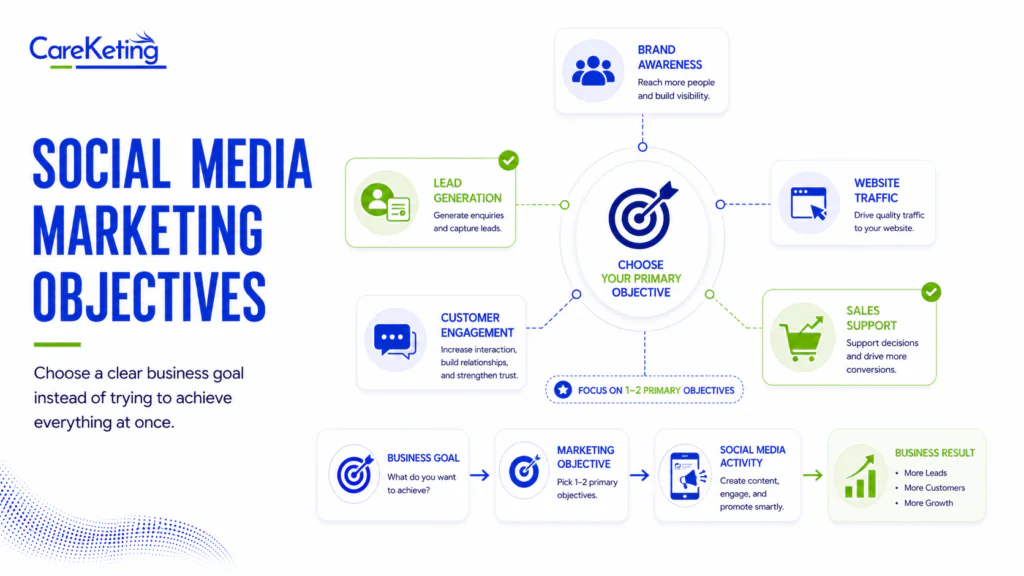
The social media marketing objectives of a business will depend on its stage, industry, and goals.
Common objectives include:
Brand awareness
Helping more people recognise and remember the business.
Lead generation
Collecting enquiries from potential customers, distributors, dealers, or clients.
Website traffic
Encouraging users to visit product pages, service pages, or landing pages.
Customer engagement
Building conversations and maintaining relationships with existing and potential customers.
Sales support
Using content, reviews, demonstrations, and advertising to influence buying decisions.
A strong strategy usually focuses on one or two primary objectives instead of trying to achieve everything simultaneously.
Types of Social Media Marketing
Social media marketing can take several forms.
Organic Social Media Marketing
This includes regular posts, reels, stories, educational content, community interaction, and customer communication without directly paying for distribution.
Paid Social Media Marketing
Businesses pay platforms such as Meta or LinkedIn to reach selected audiences. This is commonly used for lead generation, website traffic, product promotion, and remarketing.
Influencer Marketing
A business works with creators who already have the attention and trust of a relevant audience.
Social Media Content Marketing
The focus here is valuable content rather than direct promotion. A business might publish tutorials, industry insights, comparisons, or problem solving content.
Social Media Marketing Benefits
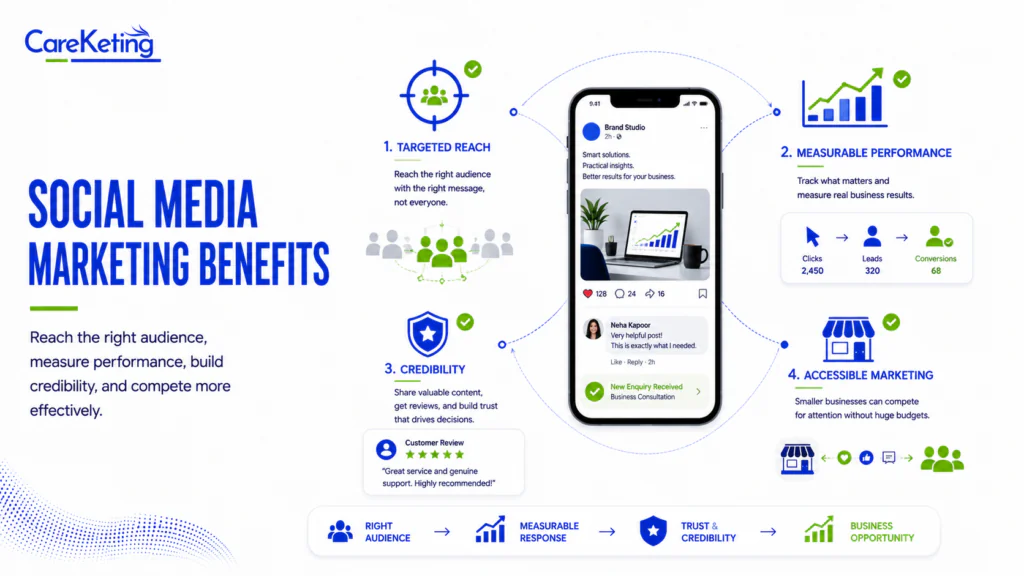
There are several social media marketing benefits, especially for businesses that use it strategically.
One major benefit is targeted reach. Instead of communicating with everyone, advertising platforms allow businesses to reach specific audience groups.
Another benefit is measurable performance. A business can see impressions, clicks, leads, enquiries, and conversion data.
Social media also gives businesses an opportunity to demonstrate credibility. Consistent educational content and real customer experiences can reduce uncertainty before someone contacts the company.
For small businesses, another advantage is accessibility. A well planned social media presence can help a business compete for attention without requiring the marketing budget of a large company.
Social Media Marketing Examples
Consider a local appliance repair business.
Instead of only posting promotional offers, it could publish short videos explaining common appliance problems, maintenance tips, pricing factors, and customer questions.
A lubricant manufacturer could showcase product applications, explain oil grades, share product testing information, and run lead generation campaigns for distributors.
A real estate company could combine location based content, project walkthroughs, customer questions, and enquiry focused advertising.
These social media marketing examples show an important principle: content should match the customer’s decision making process.
Common Mistakes to Avoid
One common mistake is focusing only on followers. A smaller audience can be more valuable when it contains the right customers.
Another mistake is posting without a clear purpose. Every piece of content should ideally educate, build trust, generate interest, or support a business goal.
Many businesses also change their strategy too quickly. Social media results require testing. One campaign or one post is rarely enough to decide whether a strategy works.
Frequently Asked Questions
What is social media marketing in simple words?
Social media marketing means using social platforms to promote a business, communicate with customers, build awareness, generate enquiries, and support sales.
What is social media marketing in simple words?
It helps businesses reach relevant audiences, communicate directly with customers, build credibility, and measure marketing activity more clearly.
What are the main social media marketing objectives?
Common objectives include awareness, engagement, lead generation, website traffic, customer retention, and sales support.
What is the difference between organic and paid social media marketing?
Organic marketing uses unpaid content and community interaction. Paid marketing uses advertising budgets to reach selected audiences.
Which social media platform is best for a business?
There is no single best platform. The right choice depends on the target audience, industry, content format, and business objective.
How long does social media marketing take to produce results?
It depends on the strategy, industry, offer, audience, content quality, and budget. Some campaigns can generate enquiries quickly, while brand building usually takes longer.
Conclusion
Understanding social media marketing meaning is only the starting point. The real value comes from knowing how to apply it to a specific business objective.
Good social media marketing combines the right audience, useful content, suitable platforms, consistent communication, and careful measurement. It is not about being active everywhere. It is about being useful to the right people and making that attention meaningful for the business.