
Social Media Marketing Meaning: Definition, How It Works, Benefits & Examples
A simple and practical guide to understanding social media marketing meaning, its purpose, working process, benefits, platforms, and real business examples.
Introduction
If you are a business owner or beginner trying to understand social media marketing meaning, the easiest way is to look beyond simply posting on Instagram or Facebook.
Social media marketing is a structured way of using social platforms to communicate with potential customers, build brand awareness, promote products or services, generate enquiries, and maintain relationships with an audience.
For example, a local restaurant may use Instagram to attract nearby customers, while a manufacturer may use Facebook or LinkedIn to reach distributors. Both are using social media, but their objectives and strategies are different.
That difference is important when learning the social media marketing meaning and understanding how it can contribute to a business.
Table of Contents
Social Media Marketing Meaning
The simplest social media marketing meaning is the use of social media platforms to market a business, product, service, or brand.
It can involve organic content, paid advertising, community interaction, customer communication, influencer collaborations, videos, educational posts, and other forms of online brand promotion.
The important point is that social media marketing is not limited to content publishing.
A business may use social media to achieve several objectives, including:
- Building brand awareness
- Increasing website traffic
- Generating leads
- Supporting sales
- Educating customers
- Improving customer engagement
- Building a stronger social media presence
Social Media Marketing Definition
A practical social media marketing definition would be:
Social media marketing is the planned use of social media platforms to reach a target audience, communicate valuable information, promote a business, and achieve specific marketing objectives.
This definition highlights the word “planned.”
Posting randomly may keep a page active, but it does not necessarily create business value. Effective marketing starts with knowing who you want to reach and what you want that person to do.
Social Media Marketing Kya Hota Hai?
If you are asking social media marketing kya hota hai in simple Hindi, it means social media platforms ke through business, product, service ya brand ko promote karna aur customers ke saath communication build karna.
For instance, a Surat based textile manufacturer could publish product information, factory videos, buyer focused content, and distributor related advertisements.
The purpose is not merely to receive likes. The purpose could be to create awareness and generate relevant business enquiries.
Social Media Marketing Kaise Kaam Karta Hai?
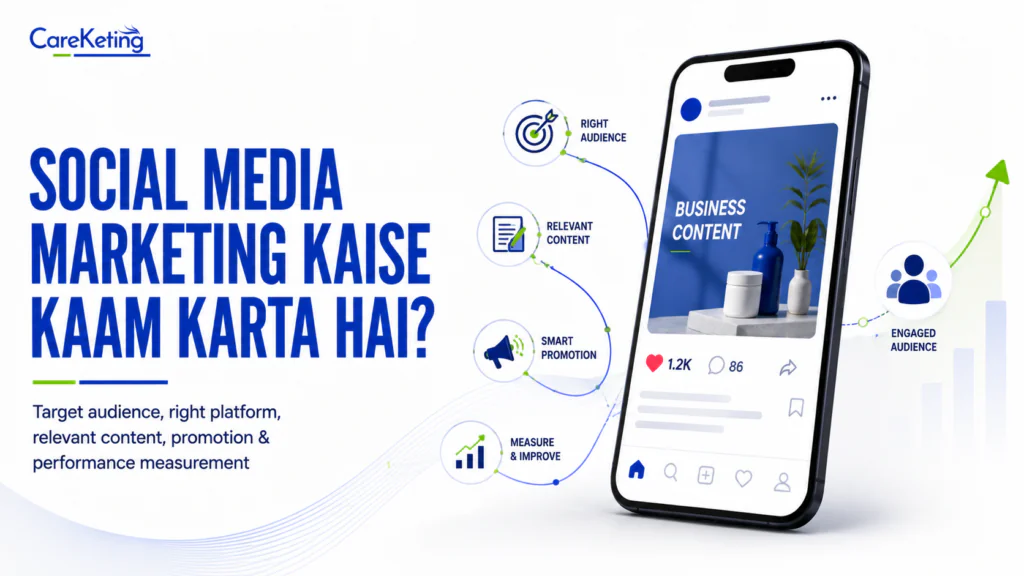
Understanding social media marketing kaise kaam karta hai becomes easier when you break it into a few steps.
1. Identify the Target Audience
First, decide who you want to reach.
A business should consider factors such as location, industry, age, interests, purchasing behaviour, business role, and customer problems.
2. Choose the Right Platform
Different social media platforms attract different audiences and support different content formats.
Instagram can be useful for visual content. Facebook can work well for communities and advertising. LinkedIn is often relevant for B2B businesses and professionals. YouTube is useful for detailed video content.
3. Create Relevant Content
Social media content should give the audience a reason to pay attention.
Examples include product demonstrations, educational posts, customer stories, FAQs, industry information, testimonials, short videos, and behind the scenes content.
4. Promote the Content
Organic reach is only one part of social media marketing.
Businesses can also use social media advertising to reach specific audiences based on available targeting options.
For example, a manufacturer looking for distributors can create a campaign specifically designed around distributor enquiries instead of promoting the product to general consumers.
5. Measure and Improve
Campaign performance should be reviewed using relevant metrics.
Depending on the objective, this could include reach, engagement, website visits, enquiries, leads, cost per lead, conversions, or sales.
Benefits of Social Media Marketing
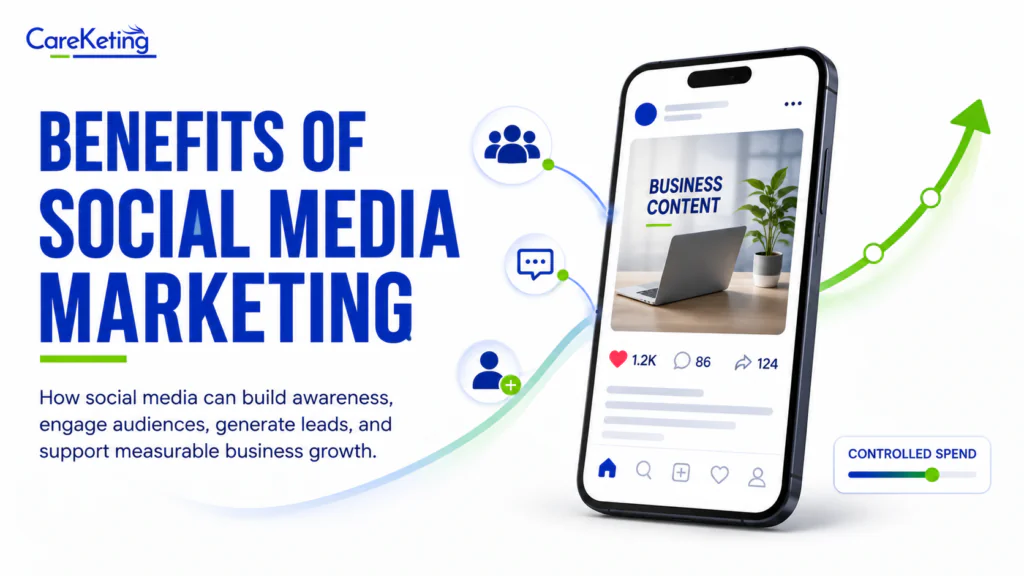
The social media marketing benefits vary according to the business and strategy.
Brand Awareness
Regular communication can help people become familiar with a business and its products.
Audience Engagement
Comments, messages, shares, and discussions allow businesses to interact directly with customers.
Lead Generation
Social campaigns can direct interested people toward lead forms, websites, WhatsApp conversations, calls, or enquiry pages.
Customer Understanding
Engagement and campaign data can provide useful information about customer interests and questions.
Cost Control
Businesses can start paid campaigns with controlled budgets and evaluate performance before making larger investments.
However, a low advertising budget does not automatically mean good results. Targeting, offer quality, creative, and follow up all influence campaign performance.
Social Media Marketing Examples
Consider a local dental clinic. It could publish educational videos, answer common dental questions, share genuine customer feedback, and run location focused campaigns.
A manufacturer could showcase product applications, production capabilities, quality processes, and distributor opportunities.
A financial services company could create simple educational content explaining loan requirements and then use targeted campaigns to generate relevant enquiries.
These social media marketing examples show why the same platform can be used differently by different businesses.
Common Mistakes
One common mistake is treating social media as a simple posting schedule.
Another is copying competitors without understanding their customers.
Some businesses also focus heavily on followers and likes while ignoring enquiries, sales, website actions, or customer quality.
Finally, changing the strategy too frequently makes it difficult to determine what is actually working.
Good social media management requires consistency, testing, useful content, and performance analysis.
Frequently Asked Questions
What is the social media marketing meaning in simple words?
The social media marketing meaning is using social media platforms to promote a business, communicate with customers, build awareness, generate leads, and support business goals.
What is social media marketing?
Social media marketing is a planned marketing activity that uses platforms such as Instagram, Facebook, LinkedIn, and YouTube to reach and engage a target audience.
What is social media marketing used for?
It can be used for brand awareness, customer engagement, lead generation, website traffic, product promotion, customer communication, and sales support.
Is social media marketing only about posting?
No. It can include content creation, audience research, social media management, paid advertising, community engagement, campaign planning, analytics, and optimization.
Which social media platform is best for business?
There is no single best platform. The right choice depends on the target audience, industry, content format, and business objective.
Can social media marketing generate leads?
Yes. Businesses can use targeted advertisements, lead forms, landing pages, direct messages, calls, and content to encourage potential customers to make enquiries.
Conclusion
Understanding the social media marketing meaning is important, but knowing how to apply the concept is even more useful.
Social media marketing is not simply about posting regularly or collecting followers. It is about understanding the target audience, choosing suitable platforms, creating relevant communication, building engagement, and measuring meaningful business outcomes.
A local business, manufacturer, B2B company, or service provider may all use social media, but their approach should be different because their customers and objectives are different.
The strongest strategy starts with a simple question: What do we want the right customer to do after seeing our content?
Once that answer is clear, content, advertising, and social media management become much easier to plan.
Before starting your next social media campaign, define your target audience, business objective, primary platform, content themes, and success metric. This gives your social media activity a clear direction instead of turning it into a routine posting exercise.